Column · @remingtonnghd955
Peptide Quality: Significance Of Third-party Recognition
Exactly How To Read A Peptide Pureness Examination: Hplc, Mass Spectrometry And Coa Analysis For Uk Researchers 2026
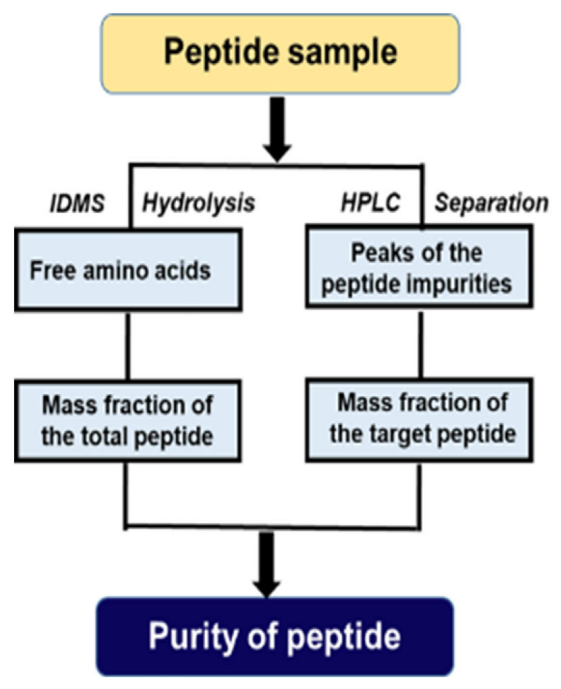
Determining peptide pureness is typically done with logical high-performance fluid chromatography (HPLC), usually combined with mass spectrometry (MS) for identification confirmation. These logical methods are typical in peptide quality assurance and you will certainly usually obtain HPLC and MS information with a research study peptide order. The main logical methods for peptides include fluid chromatography (LC), usually HPLC, incorporated with mass spectrometry (MS) for precise molecular weight determination and series validation.Additionally, bear in mind that "research-grade" peptides are meant for the lab bench and include high pureness and identity checks however are not generated as medicines. Constantly check that your peptide comes with proper analytical data (HPLC chromatogram and MS outcomes) and is classified for research study usage. Equipped with this understanding, you can confidently interpret labels like "95% pureness, research study quality" and utilize those peptides to drive your experiments without confusion. Understanding of purity levels will additionally guide you if you ever require a greater purity peptide for a particularly sensitive assay. In the long run, obtaining the pureness level right indicates much more dependable science-- which's the best objective for any researcher. With years of logical screening experience and progressed instrument platforms, BOC Sciences provides thorough peptide quality screening solutions throughout the whole process from basic materials to solutions.
Throughout solid-phase synthesis, each amino acid combining action has a yield of roughly 99-- 99.8%. When a combining fails, the growing chain is capped to avoid more elongation of the wrong sequence. The outcome is a peptide that's shorter than meant-- missing one or more amino acids.
What To Try To Find In A Certification Of Analysis
High purity is preferable due to the fact that even little impurities might interfere with experimental results or interpretations. This post will certainly damage down exactly how peptide purity is determined, why it stands out from peptide identification, what the usual purity degrees (95%, 98%, 99%) represent, and what "research-grade" suggests in practice for peptide reagents. Numerous peptide programs encounter analytical unpredictability prior to they stop working medically. We utilize advanced reverse-phase HPLC to determine the purity of customer peptide samples.- Evaluating allows scientists to recognize precisely what's in the vial, verifying both identity and high quality.
- If you've ever obtained a synthetic peptide for a laboratory experiment, you have actually most likely saw a pureness percent on the certificate of evaluation-- generally values like 95%, 98%, or perhaps 99%.
- Making sure that each set goes through proper laboratory testing helps confirm the peptide's authenticity and pureness, which is important for both research study credibility and safety.
- Not every application demands 99% purity, and filtration is a substantial element of peptide production cost.
- Products are for in-vitro laboratory research study usage only and are not for human consumption.
FDA and the European EMA have established guidelines mandating comprehensive evaluation and quality assurance for peptide products to ensure security and effectivenessr. In the context of pharmaceutical or clinical-grade peptides, research laboratory validation is integral to satisfying these guidelines. As an example, before a peptide drug can get in human tests, its supplier must demonstrate the identity, pureness, effectiveness, and safety of the peptide via confirmed analytical approaches. Peptide purity testing data are compulsory in Visit this site preclinical research studies and should be included in investigational new drug (IND) applications and later on brand-new medicine applications (NDAs).
Applications Of Our Professional Peptide Screening Solutions
We use GC-MS, ICP-MS, and various other techniques to detect contaminations, guaranteeing product security and governing conformity. Peptide sequencing is critical for recognizing the exact amino acid series of peptides, including adjustments like phosphorylation or acetylation. Sequencing allows scientists to recognize the biological function of the peptide and its communication with other molecules, helping in the layout of useful peptides for diverse applications. The peptide sample is dissolved in a compatible solvent and loaded right into an autosampler.
Along with RP HPLC, our gifted scientists can also supply information on the molecular weight of peptides determined by mass spectrometry. Matrix-assisted laser desorption ionization time-of-flight mass spectrometry (MALDI-TOF MS) and electrospray ionization mass spectrometry (ESI MS) are the two most typically utilized techniques. This write-up is attended to educational and research study reference purposes only. All peptides offered by Apex Laboratory are intended exclusively for in-vitro research laboratory study usage and are except human usage. Peptide testing paperwork need to be interpreted as batch-level logical proof for research material, not as clinical-use consent. Peak's Exactly how to Review a Peptide COA overview walks through this process detailed.